South America is a continent of stunning landscapes, ancient civilizations, and world-class culture — but not all iconic destinations benefit from more promotion. In several cases, heavy exposure has led to overtourism, environmental strain, inflated costs, and distorted visitor priorities. Promotion now risks damage, not discovery.
Here’s a look at four destinations that have reached — or are approaching — that tipping point.
1️⃣ Rainbow Mountain (Vinicunca), Peru — a destination born online
Rainbow Mountain exploded into global travel consciousness primarily through social media. Within a few years of its discovery as a tourist “must-see,” it went from a few dozen visitors per day to peaks of more than 2,000 visitors daily in high season — far beyond the original capacity of the fragile high-altitude trail.
This dramatic growth has brought:
Trail erosion and soil degradation
Roads once used by local traffic now clogged with buses
Safety issues tied to altitude sickness above 5,000 m
Waste and infrastructure stress in a location with minimal services
That’s not sustainable ecotourism — that’s overflow. When a destination’s ecosystem can’t absorb mass visitation without long-term harm, promotion becomes part of the problem.
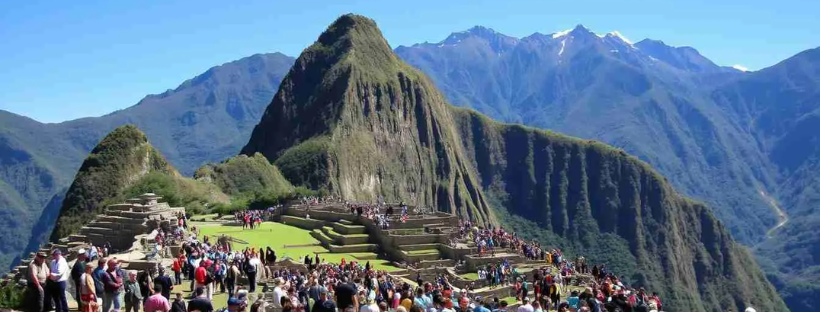
2️⃣ Machu Picchu, Peru — overtourism isn’t abstract
Machu Picchu is a UNESCO World Heritage Site and one of the most famous archaeological destinations in the world. In the first nine months of 2025, it received over 1.17 million visitors, with foreigners accounting for nearly 80 % of the total.
This scale has consequences:
✔ Foot traffic accelerates erosion on ancient stone paths
✔ Aguas Calientes (the nearby town) struggles with inflation and infrastructure pressure
✔ Local economic benefits are unevenly distributed, with many revenues going to outside tour operators and transport monopolies rather than neighboring communities
Authorities have responded with quotas, timed tickets, and designated circuits — but the core issue remains: continued growth at iconic sites prioritizes visitation over long-term sustainability.
3️⃣ Salar de Uyuni, Bolivia — iconic yet under-prepared
The Salar de Uyuni, the largest salt flat in the world at over 10 500 km², draws visitors for its surreal landscapes and mirror effects. It attracts around 300 000 tourists per year, a major influx given its remote location and limited infrastructure.
While that number is lower than Machu Picchu’s, several factors raise concerns:
Limited waste management in desert conditions
Infrastructure built quickly without long-term planning
Pressure on local service capacity (transport, water, sanitation)
And yet, online content continues to elevate Uyuni as a must-see bucket list item without sufficient discussion of environmental or social impact. When a destination becomes a tick-box for tourism rather than a site of mindful travel, it encourages volume over quality.
4️⃣ Cartagena’s Historic Centre, Colombia — culture vs commercialization
Cartagena de Indias is one of Colombia’s tourism anchors, drawing hundreds of thousands of visitors annually — more than 855 000 international tourists in 2024 alone. According to local 2025 projections, visitor numbers are poised to break historic records, especially during peak holiday seasons.
The city’s dramatic walled centre — a UNESCO World Heritage Site — has become a prime example of tourism success and its pitfalls:
Short-term rentals and luxury hotels increasingly displace local residents
Daily life gives way to commodified “Caribbean postcard” experiences
Rising prices make the city less accessible even for domestic tourists
Heavy promotion without balanced context risks turning vibrant culture into a staged attraction.
What these destinations share
Across these examples, we see a repeated pattern:
📍 High visibility ≠ sustainability
Heavy online promotion often brings large numbers before a destination has the infrastructure or management to handle them.
📍 Volume over value
Clicks and likes on Instagram or TikTok encourage breadth of visitation rather than depth of experience — and that drives overtourism.
📍 Environmental and social stress
Ecosystems, local services, and communities often pay the price for unchecked visitor growth.
The responsibility of travel media
Travel blogs, Instagram guides, listicles, and influencers shape decisions for millions of travelers. That influence comes with responsibility.
Promotion that ignores the carrying capacity of places can lead to:
Soil erosion, habitat disruption, waste accumulation
Traffic congestion and infrastructure strain
Displacement of local populations
Homogenized travel experiences replacing cultural richness
Smart travel content doesn’t just inspire — it educates.
How travel media can promote more responsibly
Instead of singularly pushing hotspots, content creators can:
➤ Highlight alternatives
Instead of Machu Picchu:
Choquequirao (remote but less crowded)
Lesser-known sites in the Sacred Valley
Instead of the Rainbow Mountain hike:
Red Valley alternatives with similar scenery and fewer crowds
➤ Focus on experience quality over quantity
Encourage slower travel, deeper engagement, and time-spent in fewer places.
➤ Include local voices
Quoting community leaders and local guides diversifies narratives and signals respect.
➤ Contextualize promotion with site capacity and impact
Travelers should know how many people visit and how those numbers affect the destination.
Final thought
Not all promotion is bad. But when a destination’s visibility begins to undermine its environment or community well-being, we have to ask:
Is this place better served by more attention — or better managed attention?
Travel writers don’t just show the world.
They help shape it.